Best High-Yield Savings Accounts (HYSA) of 2026: Maximize Your Cash Returns

By FinTech Reviews Guide Research Team Our analysis follows a rigorous research methodology, combining data aggregation from authoritative sources, algorithmic scoring, and multi-layer editorial review. Last Updated December 10, 2025
The search for the best high-yield savings accounts 2026 is more critical than ever, especially as many traditional banks continue to offer rates near the national average—which is often a barely visible sliver of a percentage. If your savings are still sitting in an account earning 0.05% APY, you are effectively leaving hundreds, if not thousands, of dollars on the table each year. That money isn’t just sitting there; it’s losing value to inflation. We know the anxiety that comes with switching banks, but the promise of a high-yield savings account (HYSA) is simple: significantly higher returns without compromising the security of your cash.
This isn’t about chasing the highest flash rate that disappears next month. This is a comprehensive guide built by analysts who understand that long-term wealth is built on consistent, safe growth. We cut through the fine print—the minimum balances, the fee structures, and the often-confusing promotional rates—to show you which FDIC-insured platforms genuinely maximize your Annual Percentage Yield (APY) while giving you the flexibility you need for your emergency fund or short-term goals.
Understanding High-Yield Savings Accounts: The Fundamentals
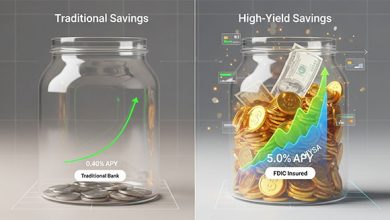
A High-Yield Savings Account (HYSA) is simply a savings account that pays an interest rate substantially higher than the national average. While a traditional brick-and-mortar bank might offer 0.01% to 0.05% APY, the best HYSAs currently provide rates ranging from 4.00% to over 5.00% APY based on current market averages.
The reason these rates are higher often comes down to their operating model. Many top HYSA providers are online-only banks or FinTech companies partnering with banks. Because they don’t have the massive overhead costs of physical branches, they can pass those savings on to you, the customer, in the form of elevated interest rates. This is a direct win for consumers looking to optimize their cash.
The Power of Compounding Interest
The key difference between a low-yield and a high-yield account is compounding. Interest in an HYSA compounds (earns interest on the previous interest) daily or monthly. Over time, this compounding effect makes a huge difference, turning modest savings into significantly larger balances much faster. For instance, a $10,000 deposit at the 0.40% national average earns just $40 in a year. The same $10,000 at 4.20% APY earns over $420, a more than 10x return increase.
Why Security Must Always Come First
High returns should never come at the expense of security. For US readers, the absolute requirement for any HYSA we recommend is FDIC insurance.
The Federal Deposit Insurance Corporation (FDIC) is an independent agency of the US government that protects you against the loss of your insured deposits if an FDIC-insured bank or savings association fails. The standard insurance amount is $250,000 per depositor, per insured bank, for each ownership category. Always verify that the bank or its partner is an FDIC member. This protection makes HYSAs one of the safest places to store your money. For those looking to manage risk across larger sums, understanding how to structure deposits across different ownership categories (like joint accounts or trusts) is crucial to keeping all funds insured.
How We Evaluate: Key Selection Criteria
Our FinTech Reviews Guide Research Team evaluates HYSAs on four non-negotiable pillars to ensure our recommendations not only pay well but function perfectly within your financial life.
Annual Percentage Yield (APY) & Rate Structure
The most obvious factor is the rate, but our analysis goes deeper. We examine:
The Sustainability of the Rate: Is the advertised APY a promotional “boost” that expires after six months, or is it the standard, variable rate? We prioritize accounts with consistently high standard rates.
Balance Tiers and Caps: Some HYSAs offer a sky-high rate only on small balances (e.g., up to $5,000). We call out accounts where the high APY is capped, ensuring you know exactly what your full balance will earn.
Compounding Frequency: While many compound daily, we confirm this structure as it provides the fastest growth.
Fee Structure and Minimums
The goal of an HYSA is to earn money, not lose it to fees.
Monthly Maintenance Fees: The best HYSAs charge no monthly maintenance fees or have easily waived fees (e.g., maintain a $1 minimum balance).
Minimum Balance Requirements: We prefer accounts with a $0 minimum balance to open and $0 minimum to earn the stated APY. Complicated minimums defeat the purpose of flexible savings.
Regulatory Compliance and Access
FDIC/NCUA Insurance: As mentioned, this is a must-have. We also consider institutions that use the NCUA (National Credit Union Administration) for credit union deposits, which offers the same $250,000 protection.
Transaction Limits (Regulation D/E): While the old Regulation D limit of six outbound transfers per month was a feature of savings accounts, it has largely been suspended. However, banks may still impose their own limits. We also look at compliance with Regulation E, which governs electronic fund transfers and protects consumers against unauthorized transactions, ensuring your money is safe during transfers.
Usability and Ecosystem Integration
Since most top HYSAs are digital, their mobile app and online platform must be flawless.
Transfer Speed: How quickly can you transfer money in (deposits) and out (withdrawals)? We look for quick ACH transfers and convenient mobile check deposit.
App Rating and Features: The ability to easily create “savings buckets” or “goals” within the app for different purposes (like a down payment vs. vacation) adds significant psychological value and is a key feature we look for.
Top Platform Comparisons & Recommendations
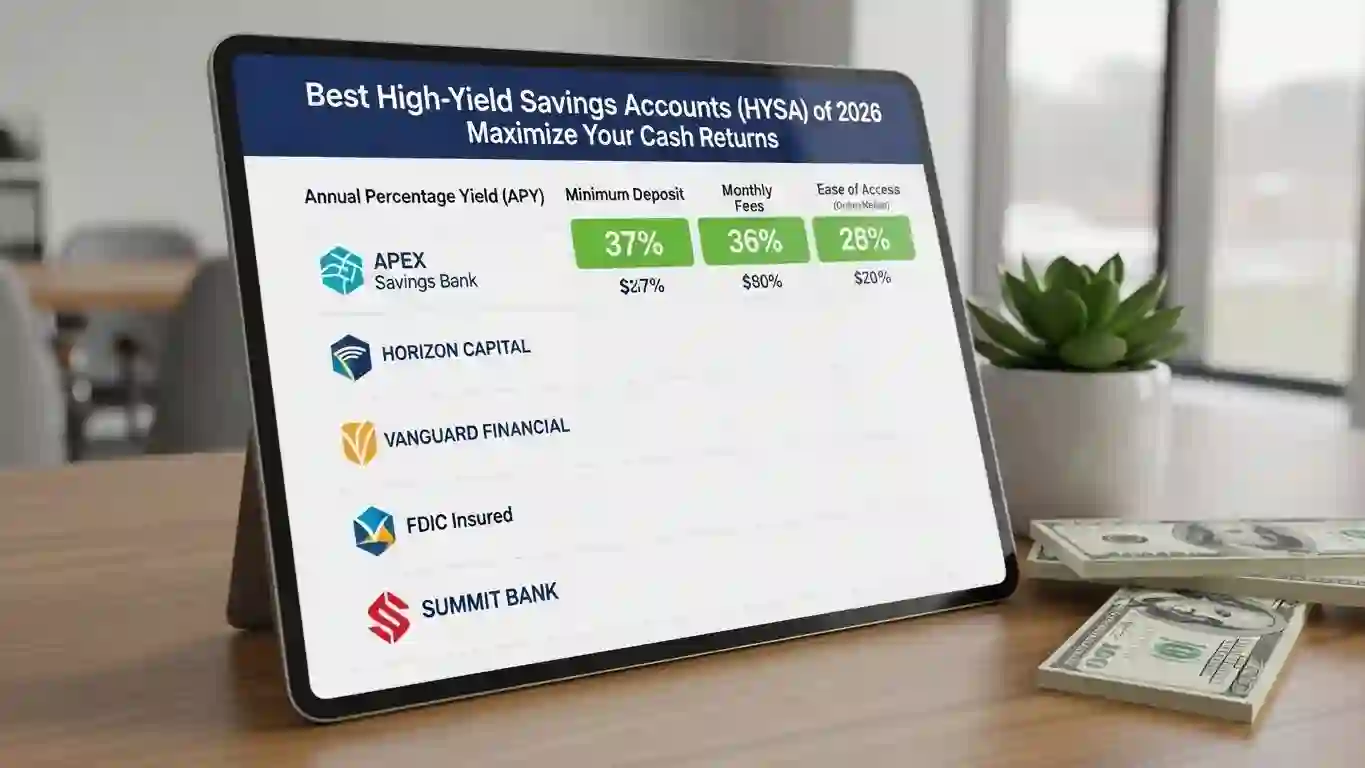
After scoring dozens of contenders against our criteria, three distinct platforms rise to the top, each excelling in a different area for the modern saver.
Ally Bank: Best for Consistent High Rates and Customer Experience
Ally Bank pioneered the online-only banking model and continues to lead the pack by offering one of the most consistently high APY rates without gimmicks or tiers.
Key Advantages and Analyst Insights: Ally offers a highly competitive rate, which currently hovers near the top of the market (often between 4.20% and 4.75% APY, based on widely reported averages). Their strength is their simplicity and consistency. There are no minimum balance requirements to open or to earn the stated APY, and they charge zero monthly maintenance fees.
Ally’s mobile app is a powerhouse of user-friendly tools. Their “Buckets” feature allows you to virtually divide your single savings account balance into up to 10 distinct goals (e.g., Emergency Fund, New Car, Vacation), giving you the visual clarity of separate accounts without the hassle of opening them. This behavioral banking feature helps maintain focus and prevents goal contamination. Ally is also known for superior, 24/7 human customer service, which is a rare and critical asset in the online-only space.
Affiliate Opportunity: Ready to start earning a top-tier APY on your entire balance with a bank known for transparent rates? Open an Ally Bank High-Yield Savings Account today.
SoFi: Best for Integrated Banking and Loyalty Bonuses
SoFi (Social Finance) has evolved into a comprehensive financial platform, and their HYSA stands out by rewarding users who centralize their banking activities.
Key Advantages and Analyst Insights: SoFi offers an exceptionally high APY that typically requires a direct deposit relationship with their SoFi Checking and Savings account. Users without a direct deposit setup will earn a lower, though still respectable, rate. This structure encourages ecosystem integration, allowing SoFi to offer higher rates to dedicated members.
The key differentiation is the $0 fee structure combined with valuable perks: free ATM access at thousands of locations and competitive rates across their entire product suite, including student loans and investing. If you are looking for a platform where your checking, savings, and investment accounts can all live under one highly functional app, SoFi is the clear choice. Furthermore, their deposits are FDIC-insured up to $2 million through a network of participant banks, far exceeding the standard limit for most depositors.
Marcus by Goldman Sachs: Best for No-Frills, Institutional-Grade Security
Marcus by Goldman Sachs combines the rock-solid security and reputation of a major financial institution with the high-yield structure of an online bank.
Key Advantages and Analyst Insights: Marcus is the perfect choice for the saver who prioritizes stability and straightforward terms above all else. They consistently offer one of the market’s most competitive rates (often in the 4.50% to 5.00% APY range, based on current reporting) with absolutely no fees, no minimum balance requirements, and no complex qualifying hoops to jump through.
The user experience is clean, simple, and hyper-focused on saving. While it lacks the advanced “buckets” or budgeting tools of Ally or SoFi, its strength lies in its simplicity and the trust established by the Goldman Sachs name. Transfers are fast, and their customer support is well-regarded. Marcus is ideal for the saver who wants to set it and forget it, resting easy knowing their emergency fund is maximizing its growth under an institutional umbrella.
External Authority: For current FDIC information regarding deposit insurance limits and account ownership categories, consult the official FDIC website.
Strategic Guide: How to Choose and Get Started
Choosing the right HYSA means matching the bank’s strengths to your personal financial habits. Here is the step-by-step guide to making a switch that pays off.
Step 1: Analyze Your Financial Behavior
Need for Access: If you plan to make frequent withdrawals (more than once or twice a month), prioritize a bank with fast ACH transfer times (2 days or less) and robust Regulation E protection against unauthorized transfers.
Existing Relationships: If you already use a digital platform like SoFi for checking or investing, consolidating your funds there can unlock the highest APY. If you prefer keeping checking and savings separate, look toward Ally or Marcus.
Balance Size: If your balance exceeds the $250,000 FDIC limit, look for institutions like SoFi that use deposit sweep networks to extend insurance coverage, or plan to open multiple single-ownership accounts at different FDIC-insured banks.
Step 2: Compare the True APY, Not the Headline Rate
Do not simply look at the advertised rate. Dig into the footnotes to determine:
Is it a promotional rate? If so, what is the lower, standard rate after the promotion ends?
Is the high rate tiered? If your balance is $50,000, but the high rate only applies to the first $5,000, the effective APY on your full balance is much lower.
Is direct deposit required? If you don’t use the account for checking, you may not qualify for the highest advertised savings rate.
Step 3: Initiate the Secure Transfer
Open the New Account: Complete the online application for your chosen HYSA. This usually takes less than 10 minutes and requires your Social Security Number and a valid ID.
Fund the Account: Link your existing checking or savings account. For security, most institutions have a low initial transfer limit (e.g., $10,000). The first transfer is typically done via Automated Clearing House (ACH).
Monitor the First Interest Payment: After the first month, verify that the stated APY is being applied correctly to your daily balance. This confirms the bank’s compliance with Regulation DD (Truth in Savings Act), which mandates clear and accurate disclosure of APY and compounding frequency.
Affiliate Opportunity: For a simple, no-fuss savings solution backed by a major name, explore the current rates at Marcus by Goldman Sachs here.
High-Yield Savings Accounts FAQs (Voice Search Optimization)
Hey Google, what are the differences between APY and interest rate?
The Annual Percentage Yield (APY) is the effective rate of return you earn, taking into account the impact of compounding interest. The standard interest rate is simply the nominal percentage rate. APY is always equal to or higher than the interest rate and is the best metric for comparing savings accounts because it shows your real-world earnings.
How many monthly withdrawals are allowed from an HYSA?
While the federal Regulation D limit of six monthly withdrawals/transfers was suspended in 2020, most banks have reinstated their own internal transfer limits, typically holding to the six-per-month maximum for outbound transfers to external accounts. Always check your specific bank’s policy to avoid fees or account closures.
Is the money in my high-yield savings account insured?
Yes, absolutely. All reputable high-yield savings accounts operate through banks that are FDIC-insured. This means your principal and earned interest are protected by the US government up to the standard limit of $250,000 per person, per institution, per ownership category, ensuring your funds are secure even if the bank were to fail.
Do I have to pay taxes on the interest I earn from an HYSA?
Yes, the interest earned from a high-yield savings account is considered taxable income by the IRS. The bank will issue you a Form 1099-INT if you earn $10 or more in interest during the tax year. This income must be reported on your federal and state tax returns. You can learn more about how to manage different forms of passive income by reading our comprehensive guide on Retirement Planning on fintechreviewsguide.com.
Can I link my HYSA to a payment app like Venmo or PayPal?
Yes, you can generally link an HYSA to payment apps like Venmo, Cash App, or PayPal using the account’s routing and account numbers, just like a regular checking account. However, you should be mindful of Regulation E, which governs electronic transfers; while your HYSA protects against bank failure, you still rely on the payment app’s internal security for transfers.
The 2026 Imperative – Your Cash Deserves to Work Harder
The era of accepting negligible interest rates on liquid cash is over. In 2026, the best high-yield savings accounts are not just a nice feature; they are a necessary component of intelligent financial management. Whether you prioritize Ally Bank for its consistency and “Buckets,” SoFi for its integrated banking ecosystem, or Marcus by Goldman Sachs for its pure, no-frills stability, the decision to switch is one that will literally pay you back. The simple act of moving your emergency fund from a major legacy bank to a competitive HYSA is one of the highest-return financial moves you can make this year.
Don’t let your money sit stagnant. Take the first step toward maximizing your cash reserves by exploring one of our top-rated options today. For further reading on optimizing your monthly cash flow, make sure to check out our detailed analysis on the Best Credit Cards for rewards and budgeting.
Your Security, Our Priority: Critical Financial Disclosures
The information provided in this article by the FinTech Reviews Guide Research Team is for general informational and educational purposes only. It is not intended as financial, investment, or legal advice.
Annual Percentage Yield (APY) rates are variable, subject to change at any time by the financial institution, and may vary based on market conditions, direct deposit requirements, and account tiers. Consumers must consult the official websites and legal disclosures of the listed financial institutions for the most current rates, terms, and conditions.
All accounts discussed are subject to relevant national Deposit Guarantee Schemes (DGS), such as the EU-wide €100,000 guarantee or the UK’s FSCS protection (£85,000), at the institution where funds are legally held. You should always consult a qualified financial professional before making significant financial decisions. The FinTech Reviews Guide may receive compensation when users open accounts via our affiliate links.