
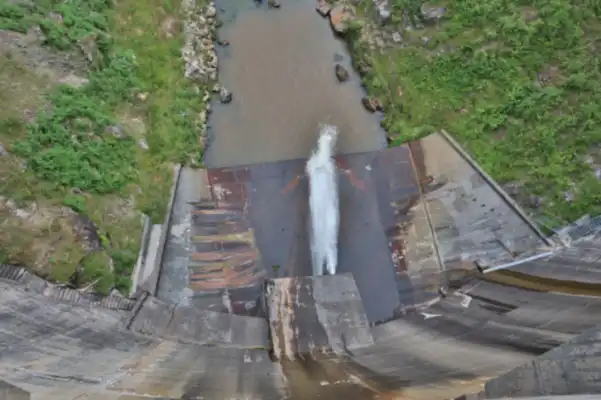
The ominous projections regarding Lake Powell water levels signal a critical juncture for the American Southwest, threatening the very infrastructure of hydroelectric power generation. A recent federal study indicates the reservoir could soon approach unprecedented lows, placing immense strain on the region’s energy security and water supply. What implications does such a decline hold for millions?
Understanding the Colorado River System’s Strain
Lake Powell, one of the largest man-made reservoirs in North America, stands as a cornerstone of the Colorado River Basin’s intricate water management system. Created by the Glen Canyon Dam, it serves as a vital water bank for several western states, including Arizona, California, and Nevada, while also generating substantial hydroelectric power. Its health is intrinsically linked to the delicate balance of the river’s flows.
For decades, the Colorado River Compact, established in 1922, has governed water allocations, but it was predicated on an era of historically higher river flows. Persistent drought conditions, exacerbated by climate change, have fundamentally altered this equation. The region has endured over two decades of arid weather, drastically reducing snowpack and runoff that feed the river system.
This prolonged dryness means less water entering Lake Powell, while downstream demands for agriculture, municipal use, and environmental flows continue. Is the existing framework truly sustainable under these new climatic realities? The imbalance between supply and demand has pushed the system to its breaking point, with reservoir levels consistently falling below historical averages, exposing vast stretches of previously submerged landscapes.
This declining trend is not merely cyclical; it represents a profound systemic challenge requiring reevaluation of long-held water management practices. The health of Lake Powell directly reflects the immense pressure on one of the most over-allocated rivers in the world.
The stark reality is that the West’s water future hinges on a swift, coordinated pivot from reactive crisis management to proactive, basin-wide sustainability measures.
The Mechanics of Hydroelectric Threat at Glen Canyon
The Glen Canyon Dam’s primary function, beyond water storage, involves generating clean, renewable hydroelectric power, supplying electricity to millions across the Southwest. This process relies on a fundamental principle: water flowing from a higher elevation through turbines to a lower elevation, spinning generators to produce electricity. The efficiency and capacity of this generation are directly proportional to the volume and pressure of the water available.
As Lake Powell water levels recede, several critical thresholds come into play, each signaling a further reduction in the dam’s operational capabilities. The first concern is reduced power generation, as lower water pressure lessens the force driving the turbines. This means less electricity can be produced, potentially leading to higher energy costs or reliance on less sustainable sources elsewhere.
A more alarming scenario arises when water levels approach the minimum power pool elevation. Below this specific operational point, the turbines at Glen Canyon Dam cannot function effectively, or safely, without risking cavitation—damage caused by vapor bubbles forming and collapsing in the water. This threshold is not arbitrary; it represents the lowest level at which the dam can still produce power.
Should the reservoir fall below this minimum, hydroelectric generation would cease entirely. What would be the immediate ripple effect of such a power loss? This would not only impact the energy grid but also compromise the dam’s ability to release water downstream as needed, creating a dual crisis for both power and water supply. Protecting the integrity of the power-generating infrastructure requires maintaining water levels well above this critical minimum.
Ecological and Economic Ripples of Declining Levels
The sustained decline in Lake Powell’s elevation extends far beyond immediate power concerns, triggering widespread ecological and economic repercussions across the region. Ecologically, the receding shoreline significantly alters aquatic habitats, impacting native fish species and the delicate balance of the reservoir’s ecosystem. The exposed lakebed, once submerged, can contribute to dust storms, affecting air quality and potentially altering regional weather patterns.
Furthermore, the sediment trapped behind the dam becomes a more pronounced issue at lower levels. What happens when accumulated silt and debris begin to impact water intake structures? This can hinder water delivery and further complicate dam operations. The reduced water volume also increases water temperature, impacting water quality and potentially fostering harmful algal blooms.
Economically, the threat to hydroelectric power generation introduces considerable instability to the energy markets. Utilities that rely on Glen Canyon power would need to source electricity from alternative, often more expensive and carbon-intensive, methods. This could translate into higher utility bills for consumers and increased operational costs for businesses across the Southwest.
Beyond energy, the recreational economy surrounding Lake Powell, including tourism, boating, and fishing, faces severe disruption. Businesses dependent on reservoir access struggle, leading to job losses and reduced local tax revenues. These interconnected impacts paint a grim picture, underscoring the broad societal costs associated with failing to address declining Lake Powell water levels effectively.
Lake Powell Water Levels: What Happens Next?
The immediate outlook for Lake Powell demands urgent and coordinated action from all stakeholders across the Colorado River Basin. Federal agencies, particularly the Bureau of Reclamation, are tasked with managing the immediate crisis, often through operational adjustments to water releases from both Lake Powell and Lake Mead. These adjustments include short-term reductions in water allocations to prioritize critical needs and maintain minimum operating levels.
However, these tactical responses are merely stop-gap measures. The long-term trajectory necessitates a fundamental shift in water management philosophy, emphasizing aggressive conservation, efficiency improvements, and sustainable demand management. Can the various states overcome historical disputes to forge truly collaborative solutions?
- Conservation Mandates: Implementing stricter water conservation measures for agricultural, industrial, and municipal users.
- Infrastructure Upgrades: Investing in infrastructure to reduce water loss through evaporation and seepage.
- Demand Reduction Programs: Encouraging residential and commercial users to adopt water-saving technologies and practices.
- Interstate Agreements: Renegotiating existing water allocation agreements to reflect the diminished reality of the river’s flow.
The stakes are incredibly high, influencing not only energy grids and agricultural yields but also the habitability of vast regions. The current projections for Lake Powell’s levels serve as a clear warning that incremental changes may no longer suffice. A comprehensive, basin-wide strategy, supported by political will and public consensus, is essential to secure the region’s future resilience against prolonged drought and climate change impacts.
Lake Powell Water Crisis Projections – Disclaimer
This article provides informational insights into the challenges facing Lake Powell and the broader Colorado River Basin. It does not constitute specific hydrological, environmental, or investment advice. Water levels and projections are subject to change based on climatic conditions and management decisions. Readers should consult qualified environmental and financial professionals for advice tailored to their individual circumstances or specific regional impacts.
Frequently Asked Questions